SCOPE
Full-Service Design
LOCATION
UPPER ST. CLAIR, PA
TIMELINE
16 MONTHS
-
What began as a simple family room refresh quickly evolved into a full-home renovation, transforming a Faux Tudor-style home in Upper St. Clair into a sophisticated, comfortable residence designed for the way my clients live today. When the project began, the home had good bones and a strong architectural presence, but its interiors had become visually and functionally stuck in the late 1990s. The challenge was not simply to update the décor, but to create a cohesive new vision that respected the character of the home while bringing greater warmth, refinement, and functionality to the entire house.
Upon arrival, the interiors were dominated by a dated Tuscan-inspired aesthetic, characterized by heavy jewel tones, dark finishes, and an abundance of visual weight. While this style had once been popular, it had begun to make the rooms feel darker and less inviting than the clients desired. The goal was not to erase the home's existing character, but to thoughtfully reinterpret it, creating interiors that felt fresh and current while remaining appropriate to the Faux Tudor architecture.
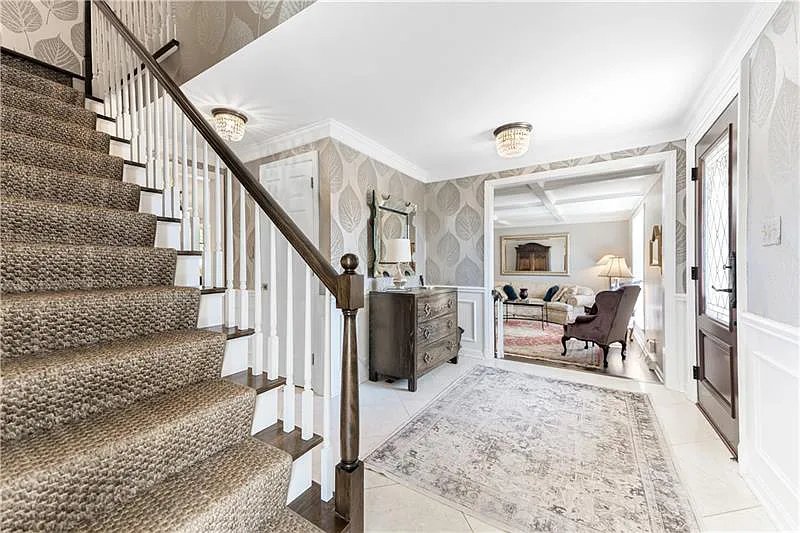
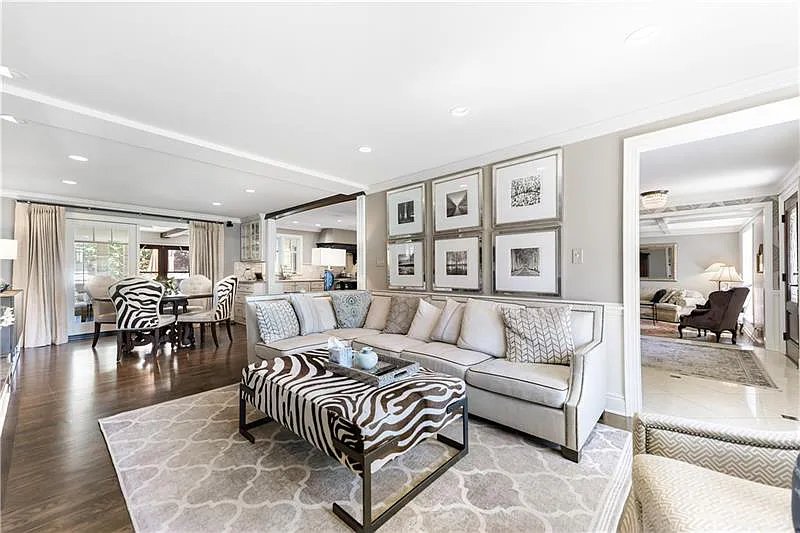
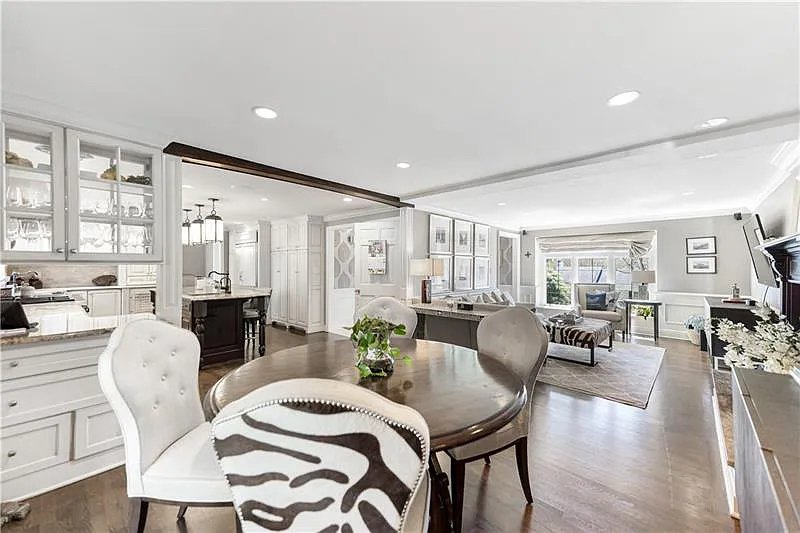
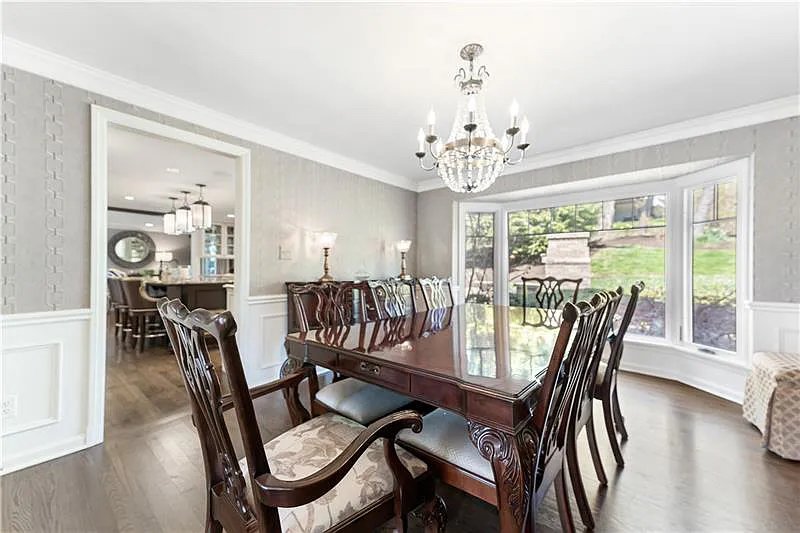
The transformation began with the floors. Refinishing them in a rich walnut stain established a warmer and more sophisticated foundation while reinforcing the traditional character of the home. Soft white trim was introduced throughout the interiors, creating contrast against the darker flooring and helping to visually connect the individual spaces. Together, these changes provided a fresh architectural framework from which the remainder of the design could develop.
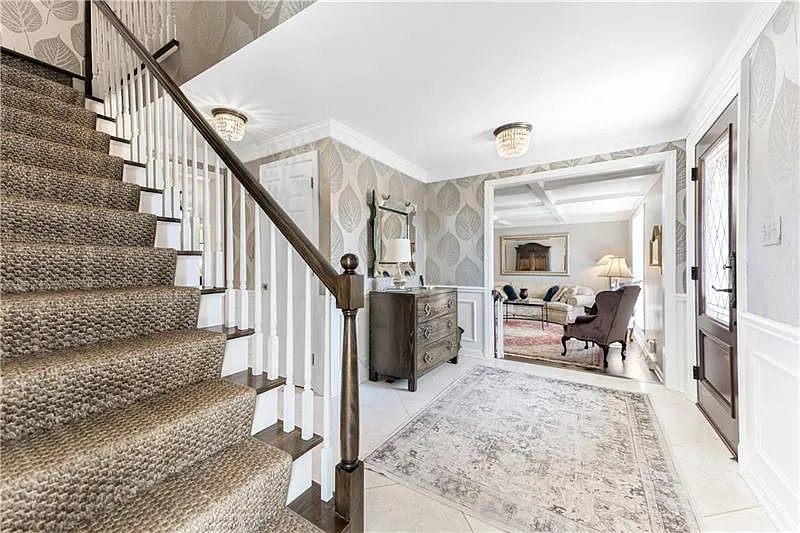
From there, the emphasis shifted toward creating interiors that felt lighter, more refined, and more layered without becoming overly contemporary. Neutral, textural wall coverings replaced some of the heavier visual elements, adding depth and tactile interest while allowing the architecture and furnishings to take a more prominent role. Rather than relying on a single neutral palette throughout the home, complementary tones and textures were used to give each room its own character while maintaining a cohesive relationship from one space to the next.
This approach allowed the home to feel unified without becoming predictable. Each room has its own atmosphere, but the transition between spaces feels intentional. Warm woods, soft neutrals, subtle pattern, and carefully placed accents provide continuity, while changes in color and texture create distinction. The result is a home that feels collected and sophisticated rather than overly coordinated.
The clients' appreciation for subtle glamour also became an important part of the design language. Rather than embracing glamour through excess, we introduced it through carefully considered details. Crystal and beaded accents appear throughout the interiors, catching and reflecting light and adding moments of sparkle against the more restrained palette. These elements provide a sense of refinement without overwhelming the rooms, allowing the home to feel elegant while remaining comfortable and approachable.
The balance between restraint and ornamentation became particularly important throughout the project. The goal was not to eliminate everything that felt traditional, but to edit and reinterpret it. Familiar materials and decorative elements were given a fresher context, allowing them to feel current without appearing trendy. This balance between traditional references and contemporary sensibility is what gives the home its enduring quality.
As the project expanded beyond the initial family room, functionality became just as important as aesthetics. The Primary Suite presented a particularly practical challenge: there was simply not enough clothing storage to meet the client's needs. Rather than allowing additional freestanding furniture to crowd the room, the solution was to create custom cabinetry around the existing fireplace.
The cabinetry was carefully designed to maximize storage while integrating seamlessly with the architecture of the room. By working around the fireplace rather than treating it as an obstacle, an underutilized portion of the room became an organized and visually balanced feature. The result provided the necessary storage while maintaining the fireplace as an important focal point. It is an example of an approach used throughout the home—solving functional challenges through thoughtful design rather than simply adding more furniture.
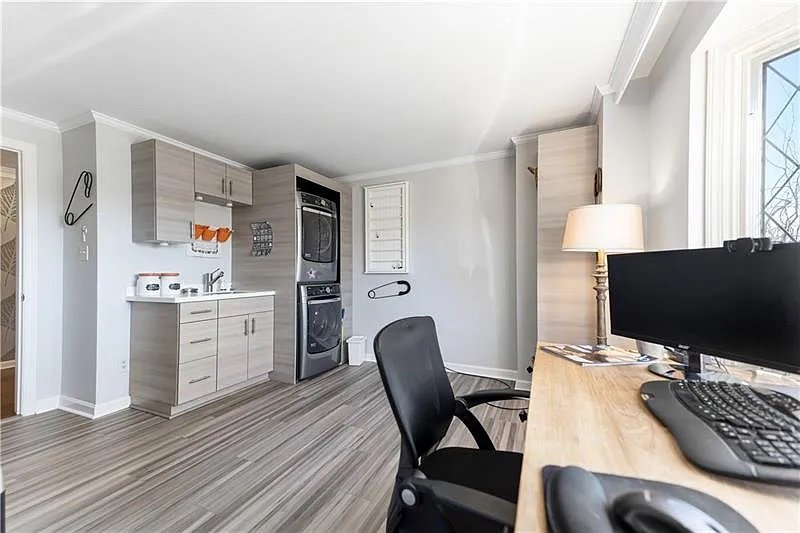
The second-floor renovation offered another opportunity to rethink how the house could better serve contemporary life. An existing bedroom was no longer being used effectively, creating the opportunity to transform the space into a dedicated laundry room while also accommodating the wife's home office.
The resulting space serves two very different functions without feeling compromised by either. Laundry facilities were incorporated alongside a comfortable and functional workspace, creating a flexible room that responds to the realities of modern life. What had once been an underutilized bedroom became one of the home's most practical spaces, demonstrating how thoughtful planning can add functionality without increasing the home's footprint.
This kind of adaptive thinking became a recurring theme throughout the renovation. Instead of assuming that every room needed to retain its original purpose, we looked at how the existing square footage could be better utilized. The result was a home that became more functional not by adding space, but by making better use of the space that was already there.
The renovation also demonstrates the importance of looking beyond surface-level updates. A successful transformation is not simply about changing colors or replacing furnishings. It is about understanding how the architecture, finishes, furniture, storage, lighting, and daily routines work together. By considering these elements as part of one larger composition, the project was able to move beyond a traditional renovation and become a more complete transformation of the home.
The finished interiors retain enough warmth and traditional character to feel appropriate to the Faux Tudor architecture, while the updated finishes, custom cabinetry, refined palette, and reimagined spaces make the home considerably more suited to contemporary living. The contrast between rich walnut floors and soft white trim, understated wall coverings and sparkling crystal details, and traditional architectural elements with modern functionality gives the home a sense of balance.
What began as a request to refresh a single family room ultimately became an opportunity to rethink the entire house. The transformation was not about erasing its previous identity, but about carefully editing, refining, and reimagining it. The result is a home that feels lighter, more cohesive, and more personal—one that embraces subtle glamour without sacrificing comfort and introduces modern functionality without abandoning character.
Ultimately, the project reflects a belief that timeless design does not require a home to remain frozen in the past. Instead, the most successful interiors acknowledge what came before while adapting thoughtfully to the present. Through considered finishes, custom solutions, layered textures, and a balance of traditional and contemporary elements, this Upper St. Clair home was crafted to feel both established and fresh—a place designed not only to look beautiful, but to function beautifully for the life being lived within it.